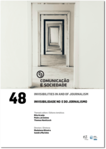
Between Institutional Inertia and Systemic Vulnerability: Understanding Invisible Threats to Journalists’ Safety
DOI:
https://doi.org/10.17231/comsoc.48(2025).6404Keywords:
journalism safety risks, online harassment, strategic lawsuits against public participation, institutional theory, LatviaAbstract
Research on journalists’ safety reveals two intertwined dimensions: physical risks in conflict zones and less tangible risks to performance in comparatively safe environments. In Latvia, as elsewhere in Europe, journalists face online humiliation, harassment, hate speech, and attacks on their professional credibility. This raises two central questions: how do journalists perceive safety risks, and are media institutions equipped to provide adequate support? This paper examines the perceptions of Latvian media professionals regarding work-related safety issues and the mechanisms available to mitigate stress and risks. A mixed-methods design was applied, combining literature analysis, a two-round Delphi expert survey (25 and 23 participants from national and regional media, non-governmental organisations, and journalism-related organisations), eight semi-structured interviews with solicitors and media law specialists, case studies of court decisions, and three focus group discussions (with legal experts, media managers, and investigative journalists). The results highlight a complex threat environment in which multiple risks coexist, while support structures remain limited. Women, regional reporters, Russian-language journalists, and freelancers emerge as the most vulnerable groups, revealing safety risks shaped by both group invisibility — where their professional identities are insufficiently recognised — and concerns of invisibility — where persistent threats are normalised or dismissed. While institutional shortcomings are partly due to resource constraints and insufficient legal or psychological expertise, reluctance and reactive practices further weaken organisational responses. A lack of effective action from law enforcement and courts, combined with the rise of strategic lawsuits against public participation, reinforces a “culture of impunity”. A paradox emerges: online humiliation and harassment are omnipresent and thus routinised, making them effectively invisible despite their persistence. By contrast, cyberattacks and strategic lawsuits against public participation cases are highly visible, as they directly affect media companies’ legal and financial interests. This asymmetry of visibility exacerbates the erosion of journalists’ professional integrity and their societal role.
Downloads
References
Alley, R. (2010). The culture of impunity: What journalists need to know about international humanitarian law. Pacific Journalism Review, 16(1), 78–95.
Alloa, E. (2023). Invisibility: From discrimination to resistance. Critical Horizons, 24(4), 325–338. https://doi.org/10.1080/14409917.2023.2286865
Baroni, A., d‘Haenens, L., & Lo, W. H. (2022). Protecting journalists from harassment: Comparing existing protection mechanisms and the effects on democracy. In J. Trappel & T. Tomaz (Eds.), Success and failure in news media performance: Comparative analysis in the Media for Democracy Monitor 2021 (pp. 59–77). Nordicom. https://doi.org/10.48335/9789188855589-3
Braun, V., & Clarke, V. (2006). Using thematic analysis in psychology. Qualitative Research in Psychology, 3(2), 77–101. https://doi.org/10.1191/1478088706qp063oa
Carlson, M. (2017). Journalistic authority: Legitimating news in the digital era. Columbia University Press.
Chen, G. M., Pain, P., Chen, V. Y., Mekelburg, M., Springer, N., & Troger, F. (2020). ‘You have to have a thick skin’: A cross-cultural perspective on how online harassment influences female journalists. Journalism, 21(7), 877–895. https://doi.org/10.1177/1464884918768500
Council of Europe. (2020). How do we protect journalists and other media actors? https://edoc.coe.int/en/media/8283-how-to-protect-journalists-and-other-media-actors.html
Council of Europe. (2023). How to protect journalists and other media actors? Extended. https://edoc.coe.int/en/media/11645-how-to-protect-journalists-and-other-media-actors-extended.html
Dalkey, N., & Helmer, O. (1963). An experimental application of the Delphi method to the use of experts. Management Science, 9(3), 458–467.
Edström, M. (2016). The trolls disappear in the light: Swedish experience of sexualized hate speech in the aftermath of Behring Breivik. International Journal for Crime, Justice, and Social Democracy, 5(2), 96–106. https://doi.org/10.5204/ijcjsd.v5i2.314
European Commission. (2020, December 3). Communication from the Commission to the European Parliament, the Council, the European Economic and Social Committee and the Committee of the Regions on the European Democracy Action Plan. COM (2020) 790. https://eur-lex.europa.eu/legal-content/EN/TXT/PDF/?uri=CELEX:52020DC0790
European Commission. (2021a, April 11). Protecting journalists and human rights defenders from strategic lawsuits against public participation (SLAPPs). https://commission.europa.eu/strategy-and-policy/policies/justice-and-fundamental-rights/democracy-eu-citizenship-anti-corruption/democracy-and-electoral-rights/protecting-journalists-and-human-rights-defenders-strategic-lawsuits-against-public-participation_en
European Commission. (2021b, September 16). Recommendation on the protection, safety and empowerment of journalists. https://digital-strategy.ec.europa.eu/en/library/recommendation-protection-safety-and-empowerment-journalists
Ferrier, M. (2018). Attacks and harassment: The impact on female journalists and their reporting. TrollBusters & International Women’s Media Foundation.
Glynn, M. A., & D’Aunno, T. (2023). An intellectual history of institutional theory: Looking back to move forward. Academy of Management Annals, 17(1), 301–330. https://doi.org/10.5465/annals.2020.0341
Grisham, T. (2009). The Delphi technique: A method for testing complex and multifaceted topics. International Journal of Managing Projects in Business, 2(1), 112–130. https://doi.org/10.1108/17538370910930545
Grøndahl Larsen, A., Fadnes, I., & Krøvel, R. (Eds.). (2020). Journalist safety and self-censorship (1st ed.). Routledge. https://doi.org/10.4324/9780367810139
Høiby, M., & Ottosen, R. (2019). Journalism under pressure in conflict zones: A study of journalists and editors in seven countries. Media, War & Conflict, 12(1), 69–86. https://doi.org/10.1177/1750635217728092
Holton, A. E., Bélair-Gagnon, V., Bossio, D., & Molyneux, L. (2021). “Not their fault, but their problem”: Organizational responses to the online harassment of journalists. Journalism Practice, 17(4), 859–874. https://doi.org/10.1080/17512786.2021.1946417
Hoxha, A., Andresen, K., & Mulliqi, G. (2024). Solidarity, safety and journalism: Collaboration between Ukrainian and Kosovar journalists in times of war. Journalism, 26(4), 843–861. https://doi.org/10.1177/14648849241303112
Ivask, S. (2024). Teaching safety of journalists: Student responses and solutions to occupational risks and hostility. Journalism & Mass Communication Educator, 79(3), 306–322. https://doi.org/10.1177/10776958241248731
jam. (2024, December 4). Aicina ziņot par naida runu un vajāšanu pret žurnālistiem un mediju darbiniekiem. Latvijas Žurnālistu Asociācija. https://latvijaszurnalisti.lv/aicina-zinot-par-naida-runu-un-vajasanu-pret-zurnalistiem-un-mediju-darbiniekiem/
Juzefovičs, J., & Vihalemm, T. (2020). Keeping channels open or screening out? The digital practices of Baltic Russian-speakers during the Russia-Ukraine conflict. Russian Journal of Communication, 12(3), 262–283. https://doi.org/10.1080/19409419.2020.1851454
Kantola, A., & Harju, A. A. (2023). Tackling the emotional toll together: How journalists address harassment with connective practices. Journalism, 24(3), 494–512. https://doi.org/10.1177/14648849211055293
Kerševan, T., & Poler, M. (2023). Silencing journalists in matters of public interest: Journalists and editors assessments of the impact of SLAPPs on journalism. Journalism, 25(12), 2485–2503. https://doi.org/10.1177/14648849231210695
Koliska, M., & Assmann, K. (2021). Lügenpresse: The lying press and German journalists’ responses to a stigma. Journalism, 22(11), 2729–2746. https://doi.org/10.1177/1464884919894088
Kreijere, D. (2024, April 11). Sods medijam par nepietiekami precīzu un neitrālu informāciju. Saruna ar advokāti. LSM. https://lr1.lsm.lv/lv/raksts/mediju-anatomija/sods-medijam-par-nepietiekami-precizu-un-neitralu-informaciju.-s.a190843/
Krøvel, R., Palumbo, F., & Orgeret, K. S. (2023). Introduction: Understanding roots and betweenness defining safety of journalists as a sub-field of research. Reading between the lines. Journalism Studies, 24(7), 825–837. https://doi.org/10.1080/1461670X.2023.2206494
Lauerer, C., Grünewald, M., Hanitzsch, T., Godole, J., Zguri, R., Godole, B., Amado, A., Bongiovanni, M., Rotelli, N., Luque, F., English, P., Hanusch, F., Löhmann, K., Meier, R., Mitterstainer, R., Preibisch, K. D., Riedl, A., Seethaler, J., Standaert, O., … Alakoaa, A. (2025). Worlds of journalism study wave 3 (2021-2024). Consolidated dataset [Dataset]. Zenodo. https://doi.org/10.5281/zenodo.15280739
Lewis, S. C., Zamith, R., & Coddington, M. (2020). Online harassment and its implications for the journalist–audience relationship. Digital Journalism, 8(8), 1047–1067. https://doi.org/10.1080/21670811.2020.1811743
Liepa, L. (2023). Iespējamās izmaiņas Latvijas Republikas tiesību aktos, kas sekmētu ES direktīvas priekšlikuma mērķu sasniegšanu Latvijā, paredzot mediju augstāku aizsardzību pret SLAPP pazīmēm atbilstošām tiesvedībām. https://ej.uz/juridatzinums
Linstone, H. A., & Turoff, M. (Eds.). (1975). The Delphi method: Techniques and applications. Addison-Wesley.
Lowrey, W., & Woo, C. W. (2010). The news organization in uncertain times: Business or institution? Journalism & Mass Communication Quarterly, 87(1), 41–61. https://doi.org/10.1177/107769901008700103
Maijanen, P., von Rimscha, B., & Głowacki, M. (2019). Beyond the surface of media disruption: Digital technology boosting new business logics, professional practices and entrepreneurial identities. Journal of Media Business Studies, 16(3), 163–165. https://doi.org/10.1080/16522354.2019.1700095
Mesquita, L., & de-Lima-Santos, M. F. (2023). Blurred boundaries of journalism to guarantee safety: Approaches of resistance and resilience for investigative journalism in Latin America. Journalism Studies, 24(7), 916–935. https://doi.org/10.1080/1461670X.2023.2185078
Miller, K. C. (2023). The “price you pay” and the “badge of honor”: Journalists, gender, and harassment. Journalism & Mass Communication Quarterly, 100(1), 193–213. https://doi.org/10.1177/10776990221088761
Miller, K. C., & Lewis, S. C. (2022). Journalists, harassment, and emotional labor: The case of women in on-air roles at US local television stations. Journalism, 23(1), 79–97. https://doi.org/10.1177/1464884919899016
Mitchell, T. S. (2025). Human rights, impunity and anti-press violence: How journalists survive and resist. Taylor & Francis.
Mohabeer, R. N. (2021). A method to analyse invisibility: Navigating the dissonance between woke and safe. Current Sociology, 70(7), 1031–1047. https://doi.org/10.1177/00113921211017605
Napoli, P. M. (2014). Automated media: An institutional theory perspective on algorithmic media production and consumption. Communication Theory, 24(3), 340–360. https://doi.org/10.1111/comt.12039
Okoli, C., & Pawlowski, S. D. (2004). The Delphi method as a research tool: An example, design considerations, and applications. Information & Management, 42(1), 15–29. https://doi.org/10.1016/j.im.2003.11.002
Orgeret, K. S., & Tayeebwa, W. (2020). Introduction: Rethinking safety of journalists. Media and Communication, 8(1), 1–4. https://doi.org/10.17645/mac.v8i1.2873
Ostrovskis, T. (2023, May 23) Kādēļ NEPLP sodīja TVNET ar 8500 eiro: Mediju un varas patiesās attiecības Latvijā. TVNET. https://www.tvnet.lv/7780378/kadel-neplp-sodija-tvnet-ar-8500-eiro-mediju-un-varas-patiesas-attiecibas-latvija
Panievsky, A. (2022). The strategic bias: How journalists respond to antimedia populism. The International Journal of Press/Politics, 27(4), 808–826. https://doi.org/10.1177/19401612211022656
Posetti, J., Aboulez, N., Bontcheva, K., Harrison, J., & Waisbord, S. (2021). Online violence against women journalists: A global snapshot of incidence and impacts. ICFJ – UNESCO.
Priya, S. P. (2021). Case study method of research. International Journal of Scientific & Technology Research, 10(4), 324–328.
Räber, M. (2023). Struggles over recognition under conditions of hypervisibility: Honneth, Rancière, and Ellison on the politics of perception. Critical Horizons, 24(4), 389–404. https://doi.org/10.1080/14409917.2023.2286869
Reporters Without Borders. (2024). 2024 World press freedom index – Journalism under political pressure. https://rsf.org/en/2024-world-press-freedom-index-journalism-under-political-pressure
Rožukalne, A., Kažoka, A., & Siliņa, L. (2024). “Are journalists traitors of the State, really?” — Self-censorship development during the Russian–Ukrainian war: The case of Latvian PSM. Social Sciences, 13(7), Article 350. https://doi.org/10.3390/socsci13070350
Rožukalne, A., & Skulte, I. (2024). Monitoring media pluralism in the digital era: Application of the Media Pluralism Monitor in the European member states and candidate countries in 2023. Country report: Latvia. CMFP. https://cadmus.eui.eu/server/api/core/bitstreams/36bc977a-45ac-5b65-895d-b8276b6f298e/content
Slavtcheva-Petkova, V., Ramaprasad, J., Springer, N., Hughes, S., Hanitzsch, T., Hamada, B., Hoxha, A., & Steindl, N. (2023). Conceptualizing Journalists’ safety around the globe. Digital Journalism, 11(7), 1211–1229. https://doi.org/10.1080/21670811.2022.2162429
Šulmane, I., & Uzule, L. (2018). Latvijas žurnālisti un mediju darbinieki. In V. Zelče (Ed.), Latvijas mediju vides daudzveidība (pp. 93–116). LU Akadēmiskais Apgāds.
Trappel, J., & Tomaz, T. (Eds.). (2021). Success and failure in news media performance: Comparative analysis in the Media for Democracy Monitor 2021. Nordicom.
Trionfi, B., & Luque, J. (2019). Newsroom best practices for addressing online violence against journalists: Perspectives from Finland, Germany, Poland, Spain and the United Kingdom. IPI.
United Nations Educational, Scientific and Cultural Organization. (2012a). Implementation strategy 2013–2014: UN plan of action on the safety of journalists and the issue of impunity. http://www.unesco.org/new/fileadminMULTIMEDIA/HQ/CI/CI/pdf/official_documents
United Nations Educational, Scientific and Cultural Organization. (2012b). UN plan of action on the safety of journalists and the issue of impunity. https://en.unesco.org/un-plan-actionsafety-journalists
Verza, S. (n.d.). SLAPP: The background of strategic lawsuits against public participation. European Centre for Press & Media Freedom. https://www.ecpmf.eu/slapp-the-background-of-strategic-lawsuits-against-public-participation/
Villagrán Sánchez, Á., & López Pan, F. (2024). Beyond journalism about journalism?: Assessing the impact of metajournalistic discourse on journalism studies. Journalism Studies, 26(2), 161–180. https://doi.org/10.1080/1461670X.2024.2414349
Waisbord, S. (2022). Can journalists be safe in a violent world? Journalism Practice, 16(9), 1948–1954. https://doi.org/10.1080/17512786.2022.2098524
Waisbord, S. (2024). Mob censorship: Online harassment of US journalists in times of digital hate and populism. In O. Westlund, R. Krøvel, & K. S. Orgeret (Eds.), Journalism and safety (pp. 30–46). Routledge.
Žurnālistes Spriņģes Vajāšanā Apsūdzētajam Sondaram Piespriests Cietumsods. (2022, March 3). DELFI. https://www.delfi.lv/news/national/criminal/zurnalistes-springes-vajasana-apsudzetajam-sondaram-piespriez-cietumsodu.d?id=54141874
Downloads
Published
How to Cite
Issue
Section
License
Copyright (c) 2025 Anda Rožukalne, Alnis Stakle, Ilva Skulte

This work is licensed under a Creative Commons Attribution 4.0 International License.
Authors own the copyright, providing the journal with the right of first publication. The work is licensed under a Creative Commons Attribution 4.0 International License.