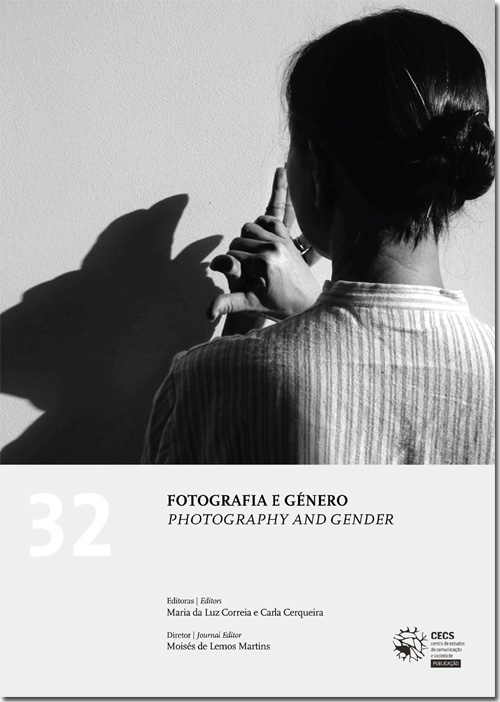
Hermaphroditism and intersexuality in Portuguese medical photograph
DOI:
https://doi.org/10.17231/comsoc.32(2017).2752Palavras-chave:
Hermaphroditism, intersexuality, medicine, photography, genderResumo
The interest harboured by the Visual Culture of Medicine in photographic images of hermaphrodites dates back in Portugal to the birth of medical photography, with the photographic recording of a case of male hermaphroditism, that was studied in 1864 by Carlos Miguel Augusto May Figueira (1829-1913) at the Medical Clinic Service of the S. José Hospital, only four years after the publication of the seminal work on this topic by Félix Nadar. This 1864 study is one of the founding elements of a Portuguese scientia sexualis in the wider context of modern sexology, as described by Michel Foucault, that evolved in Portugal between the mid-19th century and the 1930s-1940s. The thematic lineage of research into hermaphroditism and intersexuality, initiated by May Figueira was subsequently pursued by Portuguese clinicians and medical scientists from the first decade of the 20th century up until the 1940s. The ultimate goal of the medical photographic recording of hermaphrodites was to pave the way to surgical correction, in strict compliance with binary sexual dimorphism that the original diagnosis never dared to question.
Downloads
Downloads
Publicado
Edição
Secção
Licença
Os autores são titulares dos direitos de autor, concedendo à revista o direito de primeira publicação. O trabalho é licenciado com uma Licença Creative Commons - Atribuição 4.0 Internacional.